
Stringing a classical guitar involves precise steps to ensure the nylon strings are securely tied and tuned for the best sound quality. This article, based on a detailed tutorial by James Manually from Kennedy Violins, will guide you through the process of stringing your classical guitar using D’Addario’s Pro-Arte EJ45 strings. With the right techniques and materials, you’ll be able to achieve optimal sound quality and extend the life of your strings.
Preparing Your Guitar and Strings
Choosing the Right Strings
Selecting the appropriate nylon strings for your classical guitar is crucial. For this demonstration, we use D’Addario’s Pro-Arte EJ45 strings, which are suitable for most classical guitars. However, it’s essential to consider factors like string tension, tone, and playing style when choosing the right strings for your instrument. Research and consult with experts if needed to find the perfect match.
Inspecting the String Ends
Each string has two ends; one is stiffer than the other. Use the less stiff end for tying, as it is easier to manipulate and secure onto the guitar’s bridge. Inspect the strings for any signs of damage or wear, and discard any strings that are frayed, cut, or show excessive wear.
Tying the Bass Strings
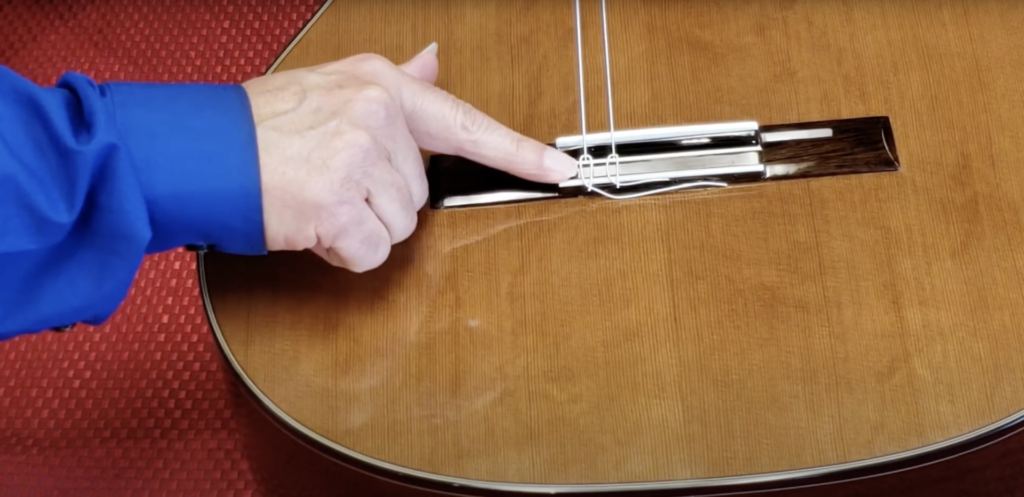
Inserting the String
Start by threading the flexible end of the string through the hole in the tie block located just behind the saddle. Leave enough slack to create loops necessary for securing the string. Make sure the string is seated properly in the bridge and not twisted or tangled.
Creating Loops and Securing the String
Wrap the string around itself behind the saddle to create friction, which helps hold the string in place. Make sure to create a firm knot by pulling the string through the loops gradually. Use a consistent and gentle tension to avoid damaging the string or the guitar. Repeat this process for the remaining bass strings.
Tying the Treble Strings
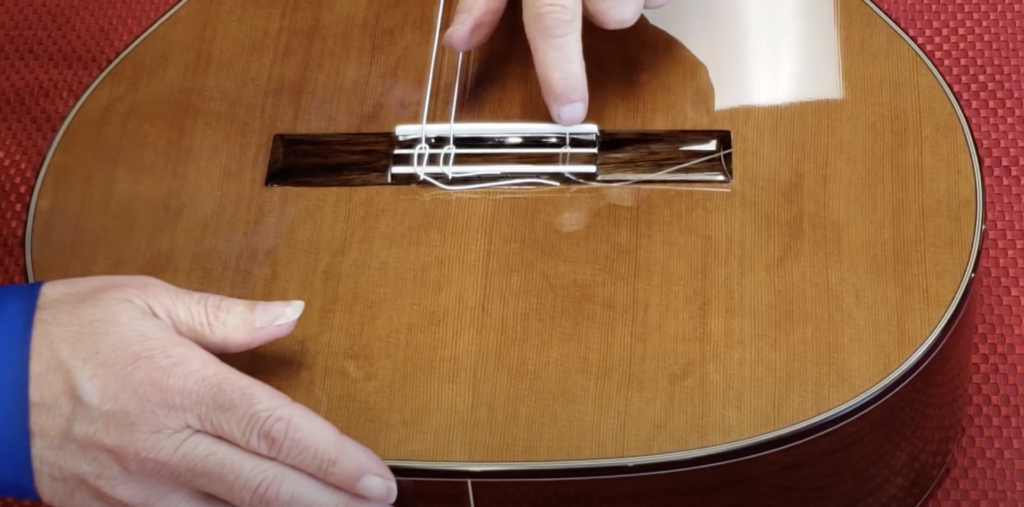
Handling the More Challenging Treble Strings
Treble strings, especially the higher notes like G and E, are thinner and more prone to slipping. Repeat the process used for bass strings but consider looping the string an extra time if necessary to prevent slippage. Be patient and take your time when working with treble strings, as they require more attention to detail.
Ensuring Proper Tension and Securing
When looping treble strings, be extra cautious to ensure the loops are tight and the knots are secure to maintain proper tension and prevent the string from detuning quickly. Use a string winder or peg winder to help maintain tension and avoid over-tightening.
Attaching Strings to the Tuning Pegs
Threading and Winding
Feed the string through the tuning peg and wind it carefully. Ensure there is enough slack for about two inches of play at the twelfth fret, which allows for proper tension without overstretching the string. Use a consistent winding pattern to avoid damaging the string or the tuning peg.
Final Adjustments
Once the string is wound on the peg, continue tuning until the desired pitch is achieved. It’s crucial to keep checking the tension and the bridge loops to ensure everything remains tight and secure. Use a tuner or tuning app to ensure accurate pitch and tuning.
Finishing Touches
Cutting and Tucking Excess Strings
Use a string cutter to trim excess string from the tuning pegs. Tuck or bend the ends to prevent them from scratching the guitar. Some guitarists use a lighter to melt the tips of nylon strings slightly to form a small ball, reducing the risk of sharp ends. This step helps maintain a clean and professional appearance.
Conclusion
Stringing a classical guitar with nylon strings requires patience, attention to detail, and the right techniques. By following these steps, you ensure your guitar is ready for optimal performance. Always check the stability of the knots and the tuning before playing to maintain the quality of sound. Remember to handle your guitar with care, store it properly, and perform regular maintenance to extend its lifespan. If you encounter any issues or have questions, consult with expert guitar technicians who can provide additional guidance and support.